Caribbean Cuisine Meets Fine Wine
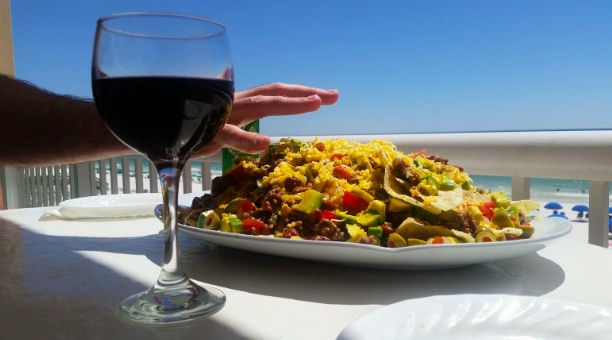
A collection of recipes and wine pairings
by

“Sun, Spice and Sips”
DOWNLOAD or READ MORE….
……………………………………………………….
INTRODUCTION
Journey with Stewart Hill to the Caribbean. Savour recipes from a splendid cuisine that will transport you to the delights of white sandy beaches and crystal blue waters.
Our recipe selection is paired with an eclectic range of wines. Each recipe has been chosen to give the flavourful taste of the Caribbean.
The Caribbean comprises over 7,000 islands. The larger islands are independent but have been heavily influenced by its colonial past. However, it is the indigenous peoples who have created a vibrant culture of language, music (Samba, Calypso, Ska, Reggae) and finger-licking cuisines that are nuanced with flavours from far-flung places that will make you want to dance!
If the recipe goes awry first time, play Bob Marley’s “No Woman, No Cry” and try again.
Our e-book of Caribbean Cuisine and wine pairings comprises 10 recipes to make and enjoy with friends, family or home alone (if you prefer not to share!)
Each recipe with three wine pairings to complement them:
STARTERS
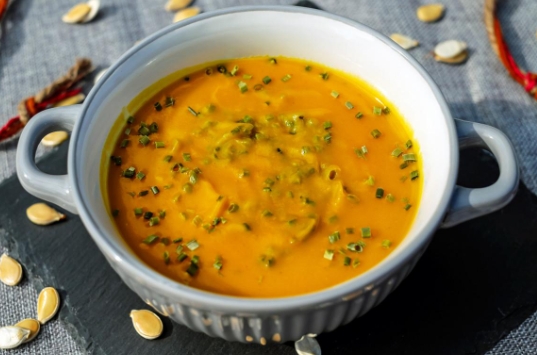
Saturday Soup
Saturday Soup? Of course, because it is traditionally cooked on a Saturday. It is a great way to feed a large (or small) family or even as a comfort food for single household. It is also a great way to ensure that you have food for other week days. The base of Saturday Soup is pumpkin.
500g / 1 lb stewing beef e.g.brisket, shin etc. 2½” diced
* (Can use chicken or omit meat if prefer.)
750g / 1½ lb yellow or white hard yam
500g /1lb sweet potato peeled diced 2″
250g / coco yam peeled washed 2″ diced
500g / 1lb pumpkin washed 3″ diced
1 med to large potato peeled washed diced 2″
1 medium carrot peeled washed chopped 1″
1 chow chow (chayote) peel wash thickly sliced
1 cob sweetcorn washed cut 6 slices
1 large onion sliced
2 sprigs thyme
1 scotch bonnet pepper whole
1 pkt chicken noodle soup or veg noodle soup
125g / ¼lb plain flour
125g / ¼ cornmeal
118ml cold water for spinners (dumplings)
½ tsp salt for spinners
4 cloves peeled and chopped
2 spring onions (scallions) chopped
Salt and freshly ground black pepper
½ juice of lemon
2 tbsp vinegar
- Wash the meat in a bowl in cold water and the vinegar
- Put meat into a large saucepan or stock pot. Cover with cold water and add the 4 cloves of garlic.
- Bring to the boil on high heat, removing any scum.
- Boil 45 minutes to 1 hour or till meat is cooked.
- Whilst the meat is cooking peel and wash the yellow yam in cold water and ½ the lemon juice.
- When the meat is cooked, remove from the pan and set aside.
- This Saturday Soup recipe has rich, hearty flavors with tender meat and a variety of vegetables, which calls for wines that can balance the richness of the stew while complementing the complexity of the ingredients.
Serves 6
Wine Pairings:
Three wine suggestions that would pair wonderfully with your dish:
- Barbera d’Asti (Italy) Bright red fruit flavors, with subtle herbal and spice notes. The crisp acidity and smooth texture make it a perfect companion for a variety of dishes, including stews and vegetable-based soups.
- Chianti Classico (Italy): Flavors of red cherry, dried herbs, and a touch of earthiness with refreshing acidity
- Chardonnay (Argentina): The aroma and flavour with citrus and lime complement this dish and highlight this fresh sea fare.
MAIN COURSES
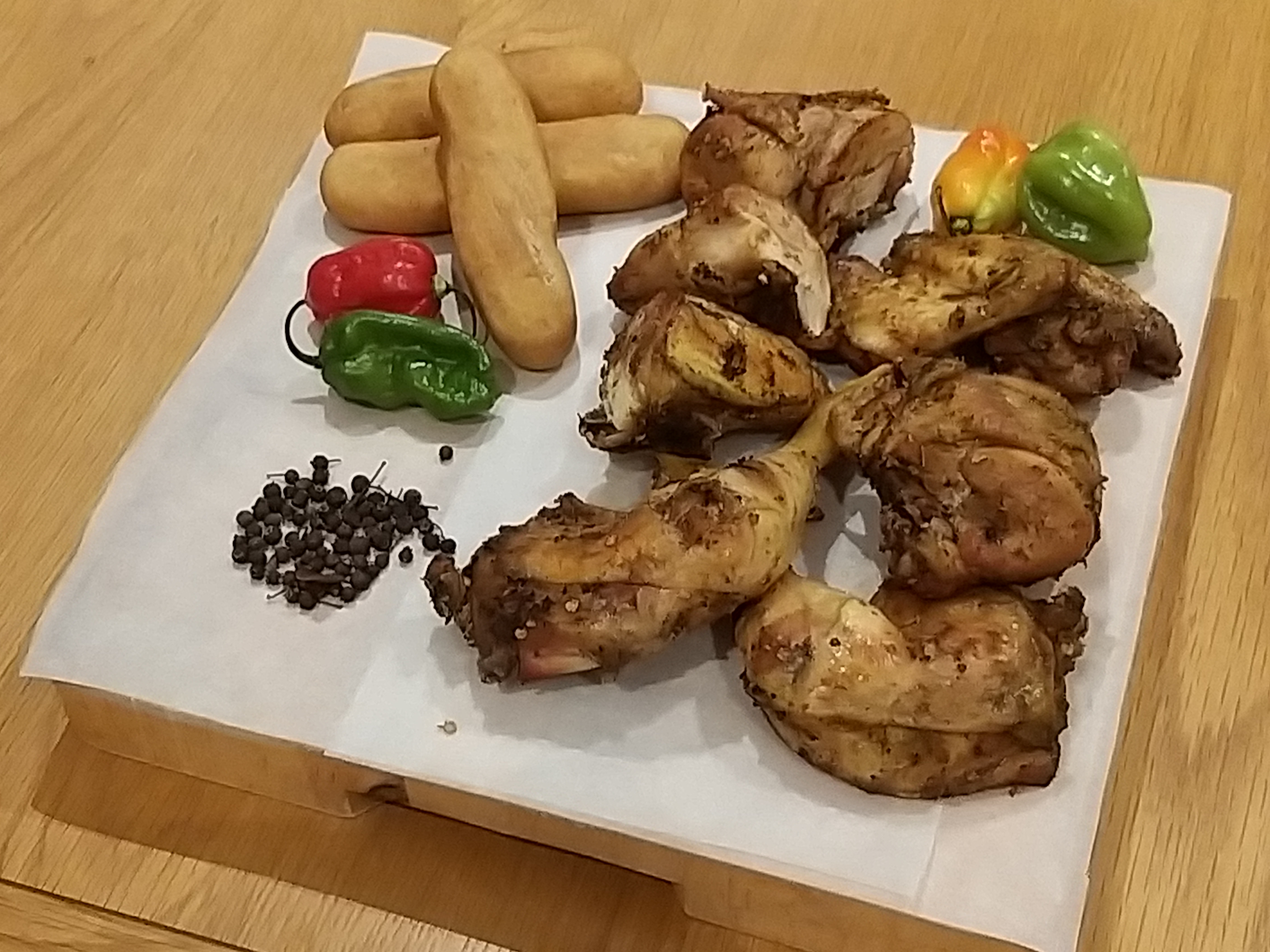
This is a firm favourite for Jamaicans and visitors alike. Originating on the island and, therefore, synonymous with all things Jamaican. The term “jerk” was coined to describe the action used to move the chicken pieces around or probably the shortened version of “jerky” Originally, this spicy flavoured chicken was cooked on an open fire made from pimento wood or sheets of metal used as a type of barbecue, covered with plantain (from the banana family) leaves. This style of cooking is said to have been conceived by the Maroons (former slaves who escaped the British, fought them for 50 years and won). The homegrown techniques of preserving meat were inherited from Africa and ingredients from the Arawak Indians, who came from Peru and inhabited the island after the Taino. It is finger-licking good!
Jerk Chicken
Prepare Jerk Sauce ( marinade )
Ingredients:
500g Scotch bonnet peppers
1 medium onion chopped
4 spring onions
30g freshly ground black pepper
30g pimento seeds
4 sprigs fresh thyme
3 tbsp salt
2″piece fresh ginger
118 ml white vinegar
1 tsp freshly grated nutmeg
59 ml soy sauce
4 cloves garlic
Blend all the above ingredients roughly, put in a sterilised jar till ready to use. (Can be stored in fridge.)
To prepare Jerk chicken
Ingredients:
10 – 12 pieces chicken ( breast, thighs, drumsticks and wings) 3 tbsp vinegar to wash chicken
2 tsp salt
1 tsp freshly ground black pepper
3 – 4 tbsp jerk sauce
- Use a large bowl. Add cold water and the vinegar to wash the chicken. Pat the chicken dry with kitchen paper and score each side (make slits)
- Add the salt, pepper and Jerk sauce rubbing into the meat.
- Marinate overnight or 1 hour before cooking
- Preheat oven to gas mark 5 / 375°F / 190°C
- Cover and cook for 1 hour turning once and a further 10 minutes to brown, or cook for 45 minutes then finish on a barbecue outside till thoroughly cooked.
- Serve with festival or fried dumplings, rice and peas or plain rice. Also coleslaw, and plantains, if desired.
Serves 6
Wine Pairings:
We recommend the following wines to pair with this dish:
Jerk chicken is bold, spicy, and packed with intense flavours — the heat from Scotch bonnet peppers, the earthiness of pimento, and the tang of vinegar and soy sauce. Wines should balance the spice, complement the smoky richness, or cool things down. Here are some great options:
- Grenache Rosé (Spain): A crisp, fruity rosé with good acidity handles the heat and refreshes the palate.
- Zinfandel (California): Jammy fruit flavours and a touch of spice make it a great match for smoky, spicy jerk chicken.
- Cava (Spain): The crisp bubbles and light, fruity flavour offers a refreshing contrast to the heat.
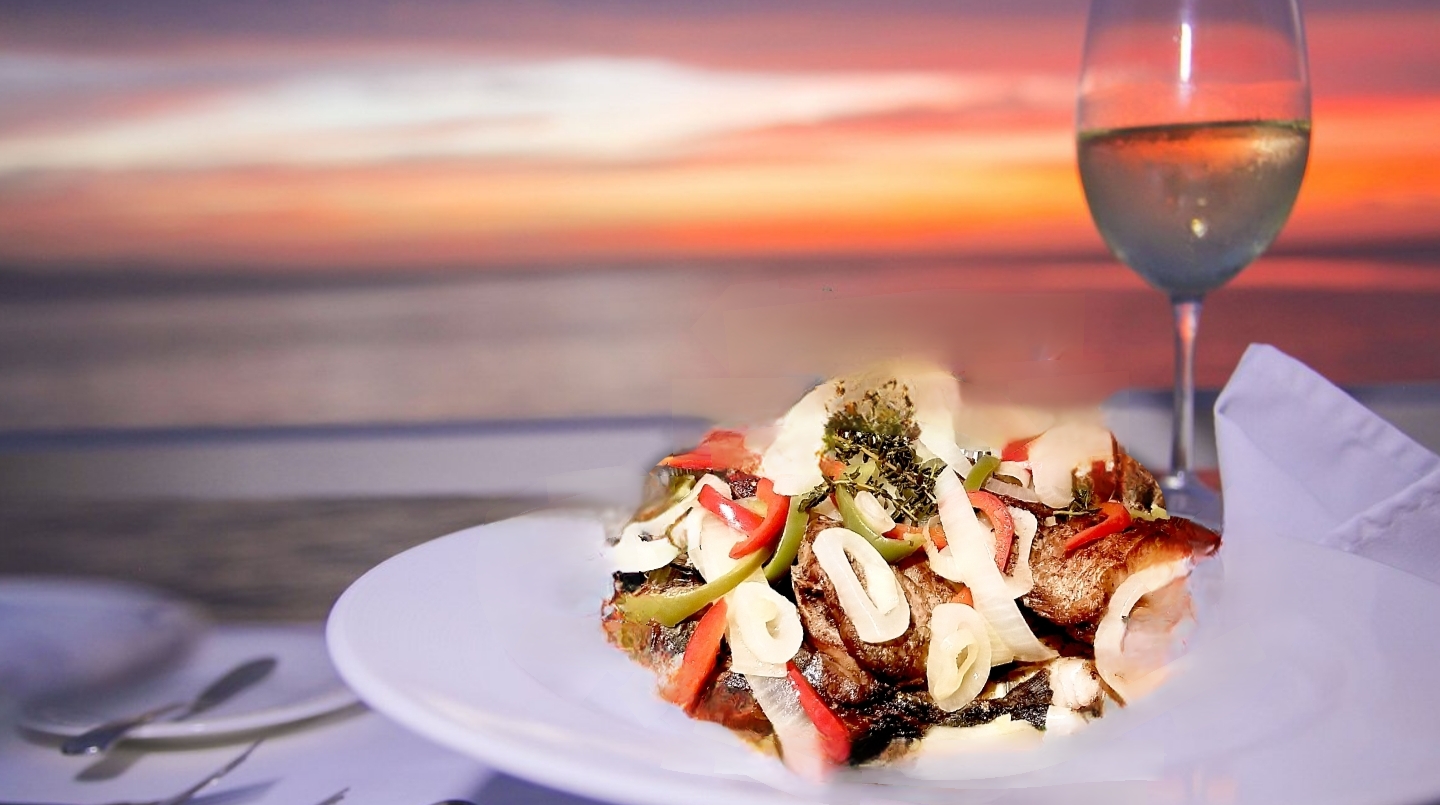
Escoveitch Fish
Escoveitch is derived from the Spanish word “Escabeche”. The art of cooking fish in this way was brought to Jamaican shores by Spaniards, more likely than not, pirates who arrived on the island with Christopher Columbus looking for treasure in 1494. They claimed the island for Spain from date until 1655 when the British came and fought a fierce battle with the Spaniards and grabbed it for themselves. The Spaniards deposited this particular method of cooking into the Jamaican culture. This is a delicious way to cook fried fish, using all the seasoning and select vegetables, as trimmings.
To Prepare ingredients for Escoveitch Fish: 1 Fresh fish (e.g. Red Bream, Snapper or Red Mullet)
1 tbsp freshly ground black pepper
1 tbsp salt
1 lemon
1 large onion
½ red bell pepper deseeded and sliced
½ yellow bell pepper deseeded and sliced
½ green bell pepper deseeded and sliced
1 Sprig of fresh thyme
125 ml white vinegar
125 ml water
½ tsp allspice seeds
- 1 scotch bonnet pepper deseeded and sliced using rubber gloves 250 ml vegetable oil
- Remove any scales gut and sharp fins from the fish. Wash the fish in a bowl with cold water and the juice from the lemon.
- Drain the fish and pat dry with kitchen paper.
- Score the fish with a sharp knife on either side.
- Sprinkle salt and black pepper in the slits and belly.
- Add the vegetable oil to a large heavy frying pan and allow to heat over medium heat and add the fish carefully.
- Fry the fish on both sides 5 minutes each side till golden brown.
- Drain on kitchen paper and place in serving dish.
- In a saucepan add the water vinegar pimento onions and peppers. Simmer for 5 minutes. Spoon the mixture over the fish and serve with fried dumplings, festival hardo bread or plain rice.
Serves 4
Wine Pairings:
We recommend the following wines to pair with this spicy dish:
- Albariño (Spain): This Spanish white has zesty citrus and mineral notes, which cut through the richness of the fried fish and balance the tangy escoveitch sauce.
- Rose (Spain): A dry, light-bodied rosé with bright acidity and red berry notes complements the fish without overpowering it.
- Chardonnay (Argentina): The aroma and flavour with citrus and lime complement this dish and highlight this fresh sea fare.
Ackee & Saltfish
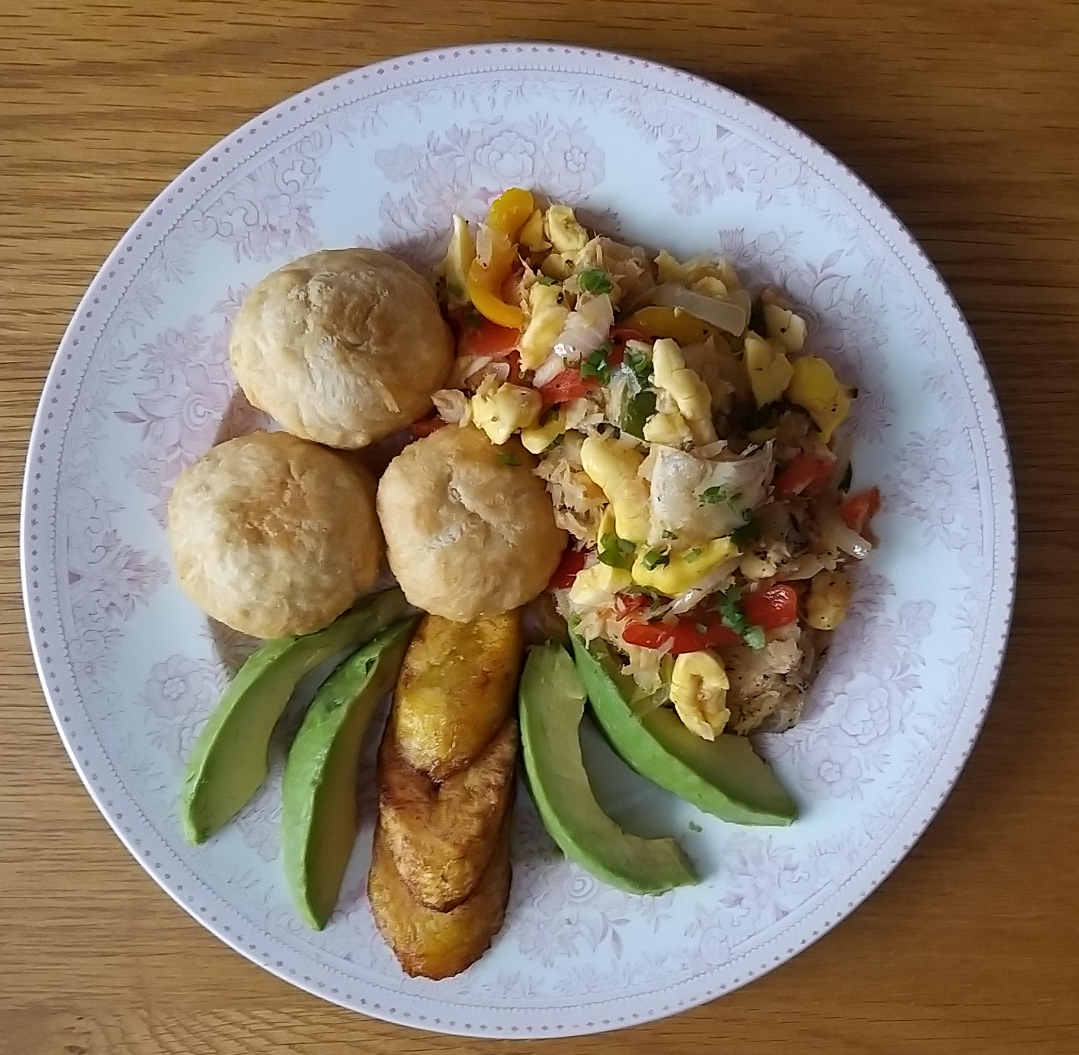
This is Jamaica’s national dish and can be eaten for breakfast, lunch or dinner.
Ackee is a vegetable and only eaten in Jamaica. It is believed that the vegetable was brought to Jamaica (and other Caribbean islands) by enslaved peoples in the 1700s but Jamaica has claimed it as her own.
The word ackee is thought to be derived from the Ghana, particularly, the Twi language “ankye” You will not have to go searching for it, as nowadays in can be found in cans in upmarket or ethnic supermarkets. Carefully, select from those packaged in Jamaica and not from “wanabees”.
The saltfish (bacalhau in Portuguese or bacalao) is rich in Vitamin D. Coupled with the relatively bland taste of the ackee, traditional seasonings brings out the flavour of both. Treat yourself and indulge your tastebuds.
1lb / 500g Salt Fish (Rinse off salt, soak in cold water in a bowl overnight ) 1 Large onion sliced
2 Spring onions ( Scallions ) chopped
¼ Red bell pepper sliced
¼ Yellow bell pepper sliced
1 Large tomato chopped
2 x 540g tins of Achee
1 tsp fresly ground black pepper
½ tsp salt
125 ml cooking oil
2 tbsp vinegar
- Drain the saltfish and boil in a saucepan with the vinegar for 15minutes.
- Drain and put in a bowl of cold water to cool down drain and remove any fins bones and skin if you don’t like the skin.
- Flake the fish into small pieces and boil again for 5 minutes. Drain and set aside.
- Drain the achee put in a bowl and pour boiling water on them and drain after 2 minutes and set aside.
- Using a large frying pan or saucepan; heat the oil and sauté the onions, peppers, spring onions, tomatoes and thyme, over a high heat for 5 minutes.
- Add saltfish salt and black pepper and stir.
- Add the ackee and stir in gently but briefly.
- Simmer for 5 minutes and serve with fried dumplings, festival or Caribbean hardo bread.
Serves 6
Wine Pairings:
We recommend the following wines to pair with this spicy dish:
Ackee and saltfish has a unique combination of savoury, slightly salty, and buttery flavours with hints of spice.
- Pouilly-Fume (France) – This versatile wine’s bright acidity and subtle fruitiness pair well with the creamy texture of ackee.
- Sauvignan Blanc (Argentina): Crisp acidity and citrus notes balance richness while complementing the dish’s garnish of onions, peppers, and thyme.
- Champagne (France): The tart effervescence to refresh the palate and work well with the crispy texture of the fried fish.
Oxtail
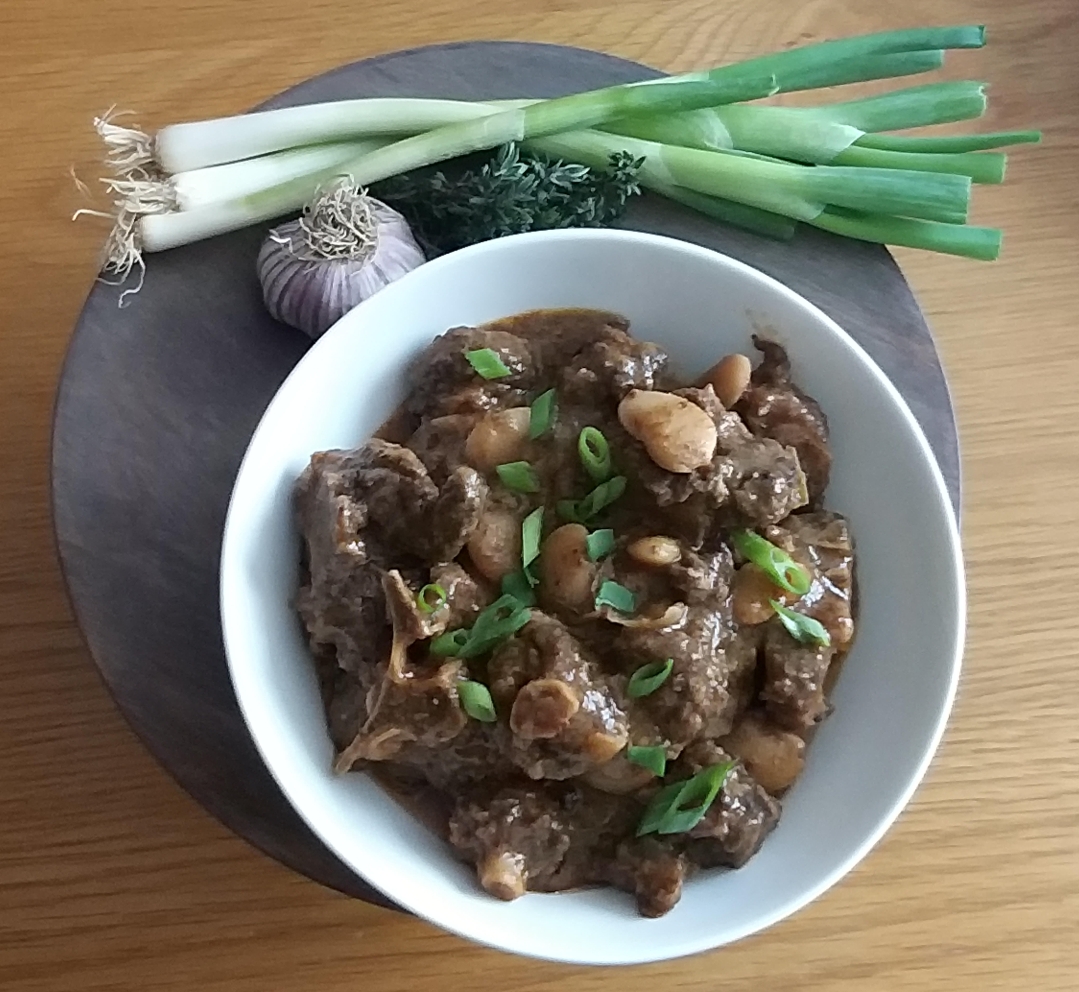
This is a culinary delight that was transformed over time by Jamaicans, who call it their own. Oxtail, however, had humble beginnings. It was what was left after the colonisers had consumed the prime cuts of beef. Through ingenuity and creativity with seasonings, it has become part of our traditional fayre and when properly cooked, it is mouth wateringly good.
Here our recipe shows you how:
1.133 kg Oxtail cut into 2″ pieces
1 large onion sliced
3 x spring onions/ scallions chopped
5 x cloves garlic peeled and chopped
4 sprigs fresh thyme
1 tbsp freshly ground black pepper
1 tbsp salt
¼ green bell pepper sliced
4 tbsp cooking or olive oil
2 tbsp soy sauce
2 tbsp tomato ketchup
600ml hot water
1 x tub of butter (optional)
- Wash oxtail in large bowl with vinegar and season with the salt, black pepper, onions, garlic, thyme, soy sauce.
- Allow to marinate overnight or at least 1 hour.
- To cook, remove the seasoning and set aside.
- Heat oil in a large saucepan and add oxtail and brown on medium to high heat turning till all sides are brown.
- Add the hot water, seasoning from the marinade, spring onion green pepper and ketchup. Stir, bring to the boil, cover and reduce heat to medium.
- Allow meat to cook for about 1 hour or until tender adding a little more water if necessary and stirring occasionally.
- Once cooked check seasoning and add a little more to your taste.
- Add the butter beans and cook for 5 minutes more.
- Serve hot with Rice and Peas or plain rice.
Serves 4 to 6
Wine Pairings:
We recommend the following wines to pair with this spicy dish.
- Malbec (Argentina) : Its dark fruit flavours of berry and plum and smooth tannins harmonize with the oxtail’s deep, savoury profile while balancing its richness:
- Aglianico (Italy): A bold red wine, with layers of dark fruit and sweet-savory spices, pairs beautifully with the dish’s hearty and seasoned nature. Its tangy acidity cuts through the richness:
- Châteauneuf-du-Pape (France): A full-bodied red with intense fruit flavours and spicy notes from Grenache, Syrah, and Mourvèdre. It enhances the dish’s depth and complements its robust flavours
Curry Goat
What came first, the curry or the goat? Curry, together with other spices were brought to Jamaica by Eastern Indians. These indentured labourers brought this pungent spice to the Caribbean between 1838 and 1917 when they were transported there to work in the British sugar industry. The word curry is derived from the original word “kari” from South East Asia.
In Jamaica the spice is made from ground turmeric, coriander seeds, cayenne, ground ginger, and many other spices, giving it its distinctive flavour and differentiating it from Indian curry. Goats were introduced to the Caribbean by the Spanish in the 1500s.
Over time, these so-called Spanish goats became known as Native or Creole goats. So, the debate which came first the goat or curry, the goat wins. Notwithstanding, Jamaicans prefer to do their own thing and name their own thing – hence curry
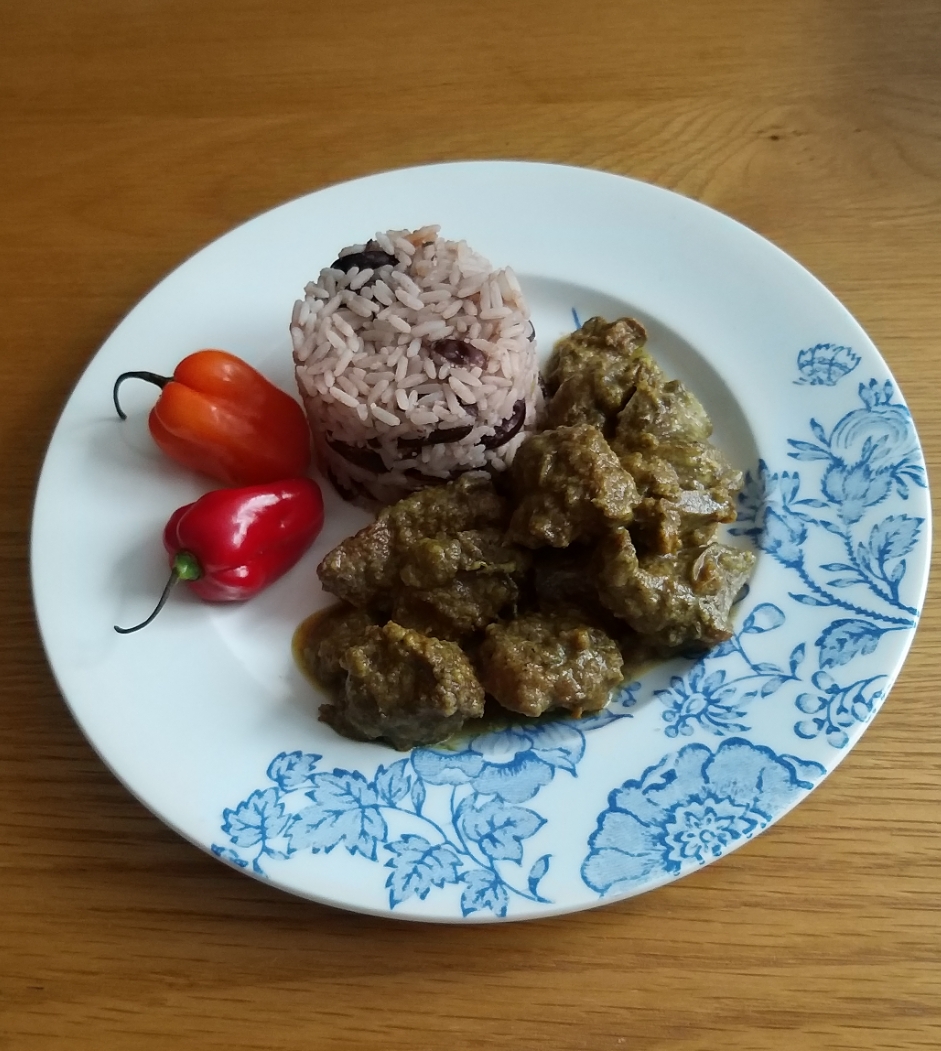
Enjoy making it!
2 lb / 500g fresh goat meat
2 large onions sliced
4 cloves garlic chopped
2 spring onions chopped
4 tbsp curry powder
2 tbsp ground turmeric
3 sprigs fresh thyme
¼ green bell pepper
1 tsp garlic powder
1 tbsp freshly ground black pepper
1 tbsp salt
1 scotch bonnet pepper deseeded and chopped using rubber gloves. 2 tbsp vegetable oil
2 tbsp vinegar
250 ml hot water
- Wash the meat in a large bowl with cold water and vinegar.
- Drain the meat. Add the salt, pepper curry powder, turmeric, garlic, spring onions, garlic powder and 1 of the onions sliced.
- Allow the meat to marinate overnight or 1 hour before cooking. Using a large saucepan on medium, heat the oil, and add the meat removing the onion and thyme setting aside.
- Add 4 tbsp of vegetable oil to a frying pan or skillet, brown the meat on all sides, remove and set aside in a bowl.
- Add the onions and thyme to the pan that you removed from the meat, and the other onion sliced and sauté till brown.
- Add the meat back to the pan, reducing heat to low. Cover and steam in own juices for 10 minutes.
- Add the hot water and scotch bonnet. Stir and simmer for 1 hour to 1½ hours until the meat is soft.
- Serve hot with plain rice or rice and peas.
Serves 6
Wine Pairings for this dish:
We recommend the following wines:
- Gewürztraminer (Germany): Its floral, tropical notes and touch of sweetness complement the warmth of the curry and the tender meat.
- Tempranillo (Spain): Soft tannins, red fruit flavours, and a hint of spice make this a great red that won’t overpower the dish.
- Prosecco Brut (Italy): The bubbles and high acidity clear the palate between bites, keeping a light, balanced impact.
SIDES
Rice & Peas
Another traditional Jamaican dish. The “peas” are actually red kidney beans. It is believed that this dish has its origins from the Akan tribe of Ivory Coast. As a Jamaican dish it is cooked with different ingredients to the Akan and eaten as a side dish to Jerk Chicken, Oxtail, Escoveitch Fish or other mains.
400g tin of kidney beans ( can also use gungo peas or blackeye peas)
500g easy cook long grain rice
400ml of fresh coconut milk (see below to prepare) or use 400ml tin of coconut milk
1 small onion peeled and sliced
2 spring onions (scallions) washed and chopped
2 cloves of garlic crushed
2 tbsp salt 1″ piece ginger finely grated
2 sprigs of thyme
1 scotch bonnet pepper
200ml water
To prepare the coconut milk
- Place a large bowl on kitchen table. Using a clean hammer, or the blunt edge of a cleaver or large kitchen knife tap the coconut firmly in the centre till you hear a dense sound and it’s cracked.
- Release the water, strain it to drink or add to make up the volume of water you’ll add to the rice and peas.
- Keep hitting the coconut then loosen the white coconut from the shell gently
- Use a vegetable peeler to remove the brown part from the coconut and discard.
- Chop the coconut into small pieces and blend with 200ml of warm water in two batches. Add 100ml of warm water and repeat again to extract more coconut milk.
- To prepare the rice and Peas
- In a medium sized saucepan add the kidney beans or other peas coconut milk garlic ginger thyme scotch bonnet, spring (scallions) onion and salt. Bring to the boil and simmer for 10 minutes.
- Rinse the rice with cold water twice. Drain and add to the saucepan with the other ingredients.
- Stir cover and reduce the heat low to medium allowing the juice to evaporate then steam on low heat until the rice is cooked and fluffy.
- Remove the scotch bonnet carefully without breaking it and serve with your meat dish.
Serves 6
We recommend the following wines to pair with the main dish and this side dish:
Wine Pairings:
Wines that complement the rich, creamy coconut milk, the warmth of the ginger and garlic, and the subtle heat of the scotch bonnet pepper.
- Riesling (Germany): Its slight sweetness balances the heat of the scotch bonnet and enhances the aromatic spices:
- Chenin Blanc (France): Crisp and versatile, with tropical notes that match the coconut and balance the savoury elements:
- Viognier (France): A fuller-bodied white with floral and stone fruit flavours that enhances the dish’s richness:
Plantains (Spanish = Platanos)
This is another Jamaican favourite. They can be eaten on their own (chipped, fried, baked or boiled). Plantains were brought to Jamaica by the Spanish in or about 1509. Heated discussions have ensued whether it is a fruit or a vegetable. Jamaicans will say the latter because you cannot peel it and eat as you would a banana. It has to be cooked. Enjoy as one of your side dishes with a Jamaican main dish.
Festival and Fried Dumplings
Festival Dumplings is a Creole dish and are believed to have originated in Jamaica. It is unclear when this dish was introduced in the island. More likely than not, Festival Dumplings were created during colonisation and reflects the techniques and ingredients from the different ethnic groups that have inhabited the island during that era and influences its cuisine even today.
Whilst Festivals are distinctly Jamaican, there are variations of fried dumplings, which can be found throughout the Caribbean islands. Each island has added its own twist to these appealing side dishes, which can also be eaten as a snack.
These Dumplings reflect the region’s love of simple, satisfying culinary delights to accompany any of the main courses in our recipes.
Festival Dumplings
250g / 8OZ plain flour (sifted)
60g Fine or medium cornmeal
60g / 2.12 ounces of white granulated sugar
1 tbsp baking powder
½ tsp salt
½ tsp vanilla essence or extract
½ tsp cinnamon
½ tsp nutmeg (grated)
150ml water
1 litre of cooking oil (but not coconut oil)
- Mix dry ingredients together in a bowl.
- Add vanilla to the water and add gradually to dry ingredients.
- Bring together gently form a dough, but avoid kneading.
- Cover and allow to rest for 20 minutes
- Heat the oil in a medium to large saucepan or Dutch pot over medium temperature.
- Divide the dough into 12 equal pieces and roll each one on a floured surface or in between the palms of your hands.
- Flatten each one gently and add to the hot oil.
As they float to the top turn them occasionally cooking till golden brown all over.
Remove from the oil and drain on kitchen paper.
Serve with Jerk Chicken, Jerk Pork, Escoveitch fish or Ackee & Saltfish. Etc.
Note: Can be reheated in a microwave the following day for approximately 8 – 10 seconds, or in the oven for 5 minutes on 190°C / 375°F. Serves 6
Fried Dumplings
256g plain flour
2 tsp baking powder
½ tsp salt
2 tsp softened butter
120ml water
300ml vegetable oil
- Mix the dry ingredients together add the butter rub in with finger tips. Add the water gradually bringing the mixture together to form a dough.
- Knead the dough by hand for a couple of minutes till smooth and not sticky.
- Allow to rest whilst heating up the oil in a medium to large frying pan or skillet.
- Divide the dough into 12 equal pieces.
- Roll into golf ball sized balls. Flatten a little and press in the middle.
- Place the dumplings in the hot oil.
- Fry turning once till golden brown on each side.
- Drain on kitchen paper and serve whilst hot with Ackee & Saltfish (Jamaican national dish).
Serves 4 to 6
DESSERTS
RUM
Today, let’s stop off in Jamaica (“land of wood and water”). It is the fourth largest island in the Caribbean. This is a vibrant history of swashbuckling pirates, the fighter spirit of the Maroons, and Reggae music. All of the above have deposited into this vibrant culture and its cuisine with influences from Africa, India, Spain and Portugal. Jamaica is well known for its rum both white and dark rum and boasts the only female rum blender in the world for many decades (Joy Spence of Appleton Estates, St Elizabeth).
Legend has it that Captain Morgan (who became Governor of Jamaica in 1676) would blow the whistle soldered onto his tankard for of the heady liquid. Morgan was a former pirate, who would have consorted with such characters as Edward Teach (thought to have inspired Johnny Depp in his role of Pirates of the Caribbean).
The majority of pirates disappeared after Port Royal; called the wickedest city on earth was consumed by an earthquake on 7 June 1692. Only the church spire can be seen today sticking out of the sea. Folklore has it the bells toll to warn of impending doom and gloom.
Rum was also used as a form of trade and naturally found its way into the Jamaican cuisine.
Whilst making this delicious dessert, allow yourself to be transported to warm, clear blue Caribbean waters, whilst listening to Bob Marley.
Jamaican Rum Cake
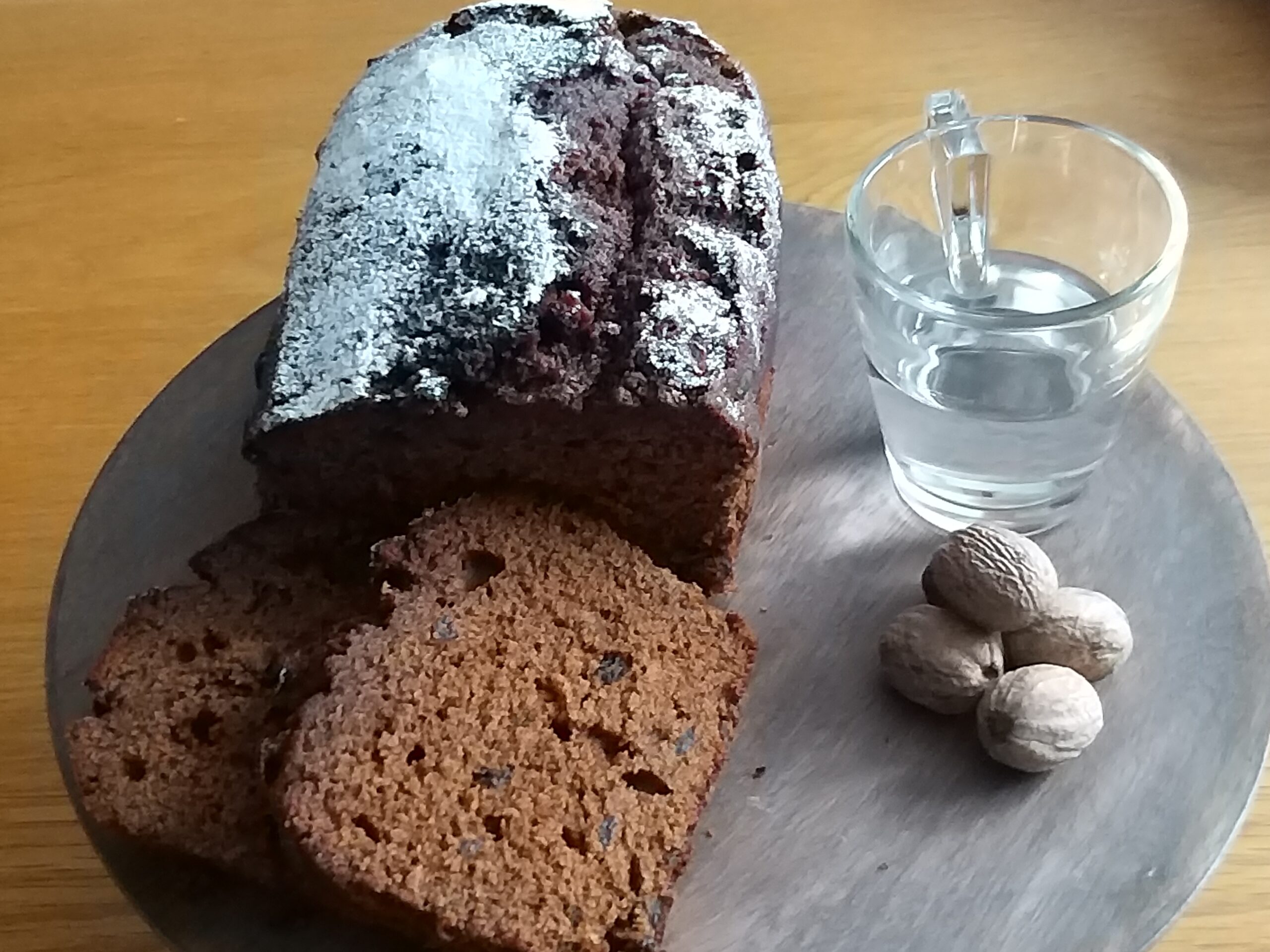
To Prepare Ingredients for Jamaican Rum Cake:
Soak dried fruit in 700ml port wine for 1 week or more or steam in the wine 10 – 15 minutes and cool and store in sterilised jar till ready to use. Coarsely blend (or if preferred finely blend) before using in the cake mixture.
500g / 1lb Rasins
250g ½lb Mixed Fruit
250g Prunes
250g Currants
500g / 1lbs Butter
375g / ¾lb Soft Brown Sugar
625g / 1¼ lb Plain Flour and 2 tbsp Baking Powder or 1¼ lbs Self raising Flour 7 Large Eggs beaten
1 tbsp Lemon juice and ½ zest lemon
1½ tbsp Vanilla Essence
2 tbsp Gravy Browning
1 tbsp Nutmeg
1 tsp Cinnamon
1 tsp Allspice
240 ml port wine
70ml white Rum
- Grease and line 2 x 8″ cake tins with greaseproof paper or line 4 x 1lb foil loaf tins with 1lb loaf tin liners.
- Preheat oven to 180°C / 356°F
- Using a food mixer or hand mixer beat butter and sugar till light in colour and fluffy.
- Gradually beat in egg mix till fully incorporated.
- Add soaked fruit, lemon juice and zest, vanilla, gravy Browning.
- Mix port wine and rum together and add half mix.
- Add spices, flour and the baking powder if using plain flour folding in gently.
- Pour cake mix into cake tins gently smoothing top where necessary.
- Bake on 180°C / 356°F 20 min in centre of oven
- Reduce temp to 170°C / 338°F for 35 to 40 more minutes. Test using a skewer.
- Cool cakes in their tins on cooling rack for 10 minutes then pour rest of wine and rum mix over them evenly.
- Once cool wrap in baking paper. Serve as required.
- Cakes can keep 1 to 2 months if more port and rum is poured over them occasionally.
- Store in a cool dry place.
Wine pairings
We recommend the following wines:
This luscious, rich, semi-sweet cake is usually eaten as a dessert and pairs beautifully with wines that complement its intensity without being overpowering.
- Sauternes (France) – A sweet, golden wine with notes of honey, apricot, and botrytis complexity. It has the richness to match the dessert and a balancing acidity.
- Moscato d’Asti (Italy) – Light, sweet, and slightly sparkling with peach and orange blossom notes. It’s a refreshing contrast to the boozy warmth of the rum.
- Sauvignan Blanc (Argentina) – Pleasant and sweet with typical characteristics of the grape, pairs very well with the warmth of rum desserts.
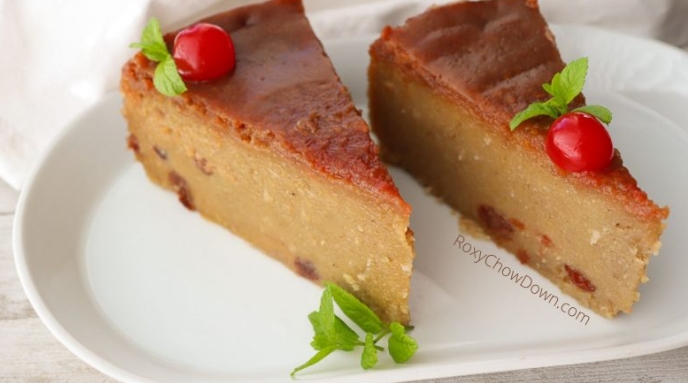
Sweet Potato Pudding
Sweet potato is a warm weather vegetable which originates from parts of Central and South America. It is the third most widely grown root vegetable in Jamaica and ranks after yams and cassava.
Not much is known about the origins of the sweet potato pudding (not to be confused with the sweet potato pie from the southern states in the US). Its existence in Jamaica can be traced back centuries and were one of the main crops of the Tainos, who were the indigenous people on the island.
1kg sweet potato (grated)
120g plain flour
Add pinch of salt
120g fine cornmeal
2 fresh coconuts (see how to prepare below)
100g raisins
125g yellow yam (grated )
120g demerara sugar
1tsp nutmeg
1 tsp cinnamon
2 tbsp vanilla extract
1 tsp almond essence
½ tsp salt
2 tbsp white rum (optional )
125g butter
2½ cups warm water
Preparing the coconut milk:
- Using a hammer break the coconuts by tapping with the hammer firmly over a bowl.
- Release the coconut water from the coconut into the bowl. Strain the coconut water and set aside.
- Using the hammer break the coconuts into a few smaller pieces on the outside of the coconuts.
- Take a paring knife remove the white coconut flesh from the shells. Pare off the brown part of the flesh. Discard. Cut up the white part into ½ inch pieces. Put half the coconut per time into a blender with 1 cup of the warm water and blend thoroughly.
- Strain using a sieve squeezing out the coconut milk over a bowl. Repeat till you have blended and strained all the coconut and added the coconut water to produce 948ml of coconut milk.
To make the pudding:
- Grease and line a 9 inch baking pan and preheat oven to 180°C / 350°F. Mix the sweet potato, yam, cornmeal, flour and raisins together in a large bowl.
- In a separate bowl mix the coconut milk with the brown sugar, nutmeg, cinnamon vanilla, almond essence and rum together till the sugar is dissolved.
- Keep 250ml of the coconut milk mixture in a jug aside and pour the rest into the dry ingredients and mix thoroughly.
- Pour the mixture into the baking pan and put pieces of the butter on top of the pudding.
- Bake for 1 hour then pour the rest of the coconut mixture on top of the pudding.
- Return to the oven for 15 minutes.
- Leave to cool once baked and serve.
Wine pairings we suggest as follows:
- Riesling Auslese or Beerenauslese (Germany) – Lush, sweet, and aromatic with flavors of stone fruit and citrus, this wine’s acidity cuts through the richness.
- Vin Santo (Italy) – A classic dessert wine with dried fruit, nutty, and honeyed flavours that complement the warmth and sweetness
- Pedro Ximénez Sherry (Spain) – Intensely sweet and syrupy with flavors of raisins, figs and molasses. It mirrors the deep caramel notes of rum desserts.
A Brief Insight into Our Story
Stewart Hill is more than a company; it’s a family legacy led by Lucilda Stewart, the youngest of eight children. Born in Jamaica with ancestral roots spanning Ashanti, Scottish, Spanish, and Indian lineage, Lucilda transformed a hobby into Stewart Hill Wines.
“We’ve carved a unique niche through dedication and meticulous research by investing in wineries to develop our own range of wines.”
(Lucilda Stewart Dir. LLM)
Our mission is to inspire everyone to dare to dream and exceed expectations with every sip of our wines. Just as our life’s journey is a tapestry of cultures and experiences, so are our wines – vessels of culture and connection that bridge continents and generations.
Accept our invitation to visit us at stewarthilluk.com and be inspired.

Lucilda Stewart LLM
Dir. Stewart Hill Walker Wines, London, Uk